Other pilots
You share the system with other pilots, but you only see their ships when your radar does. Every hull’s radar sees another ship 20 000 km away while that ship’s drive burns, and 2 000 km away while it coasts or sits docked. A better radar from Sensors I or II sees further; see your ship. The Charter’s stations are always on your map, and its traders and miners whenever they are within ten million kilometers of one of your ships.
On radar
Navigation lists every other pilot’s ship your radar sees under On radar, the nearest first. Each row names the pilot by their callsign, such as Pilot 3F2A, and says the ship’s hull class, whether its drive burns, how fast it is closing on you or moving away, and how far it is.
Tap a row to open the talk with that pilot. While their ship is on radar, Show on map moves the view to it.
Hailing
Type a line into the field and press Send. The pilot reads it at once if they are playing, and otherwise when they next play. A line can be up to 280 characters long. Your own lines show in the talk as well, so you can follow the conversation.
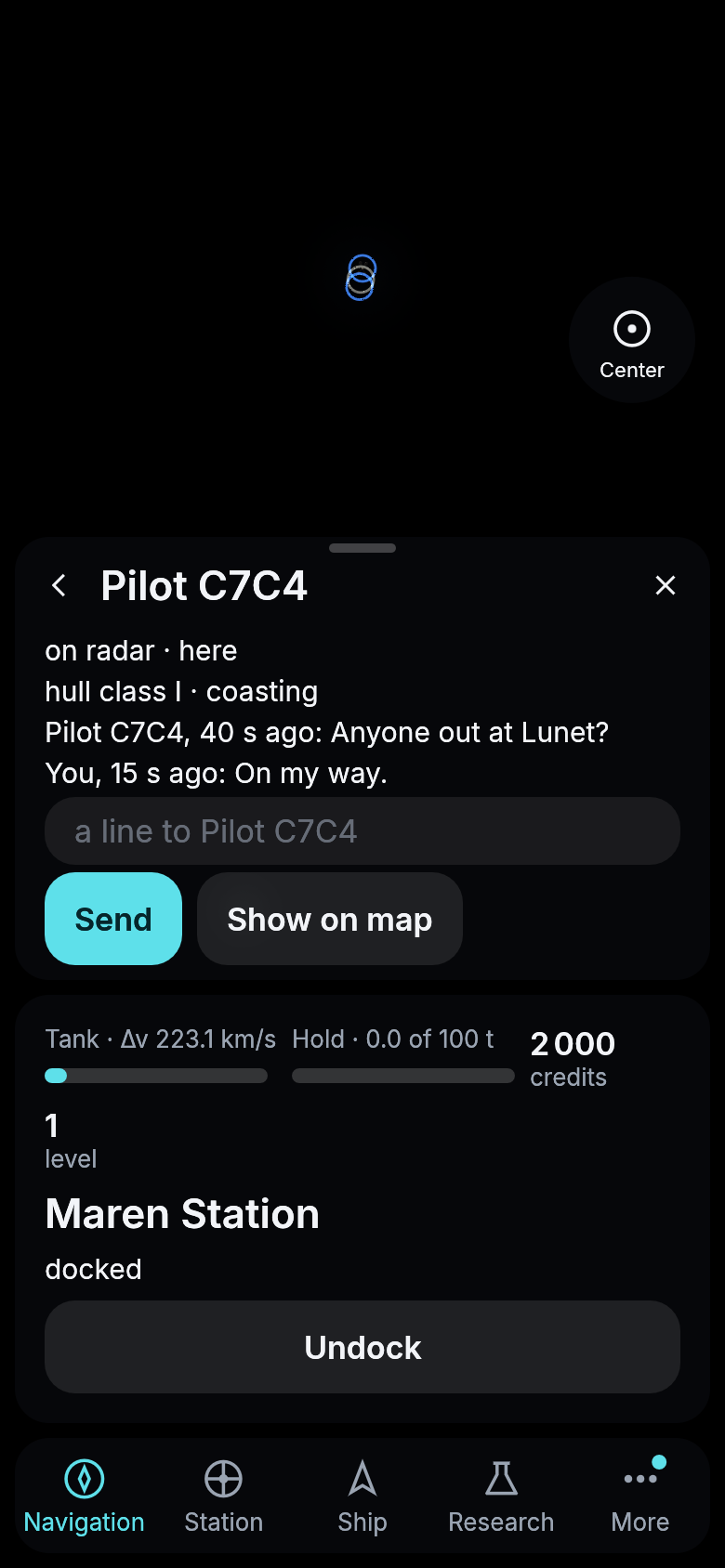
A talk with another pilot docked at the same station.
More › Messages lists everyone you have talked with, the latest first, with their last line. New hails are marked new, the Messages row says how many are waiting, and More in the bar is marked until you have read them. The newest one you have not read also waits on the card as a notice, and tapping it opens that talk. Tap a pilot to read the talk and answer.
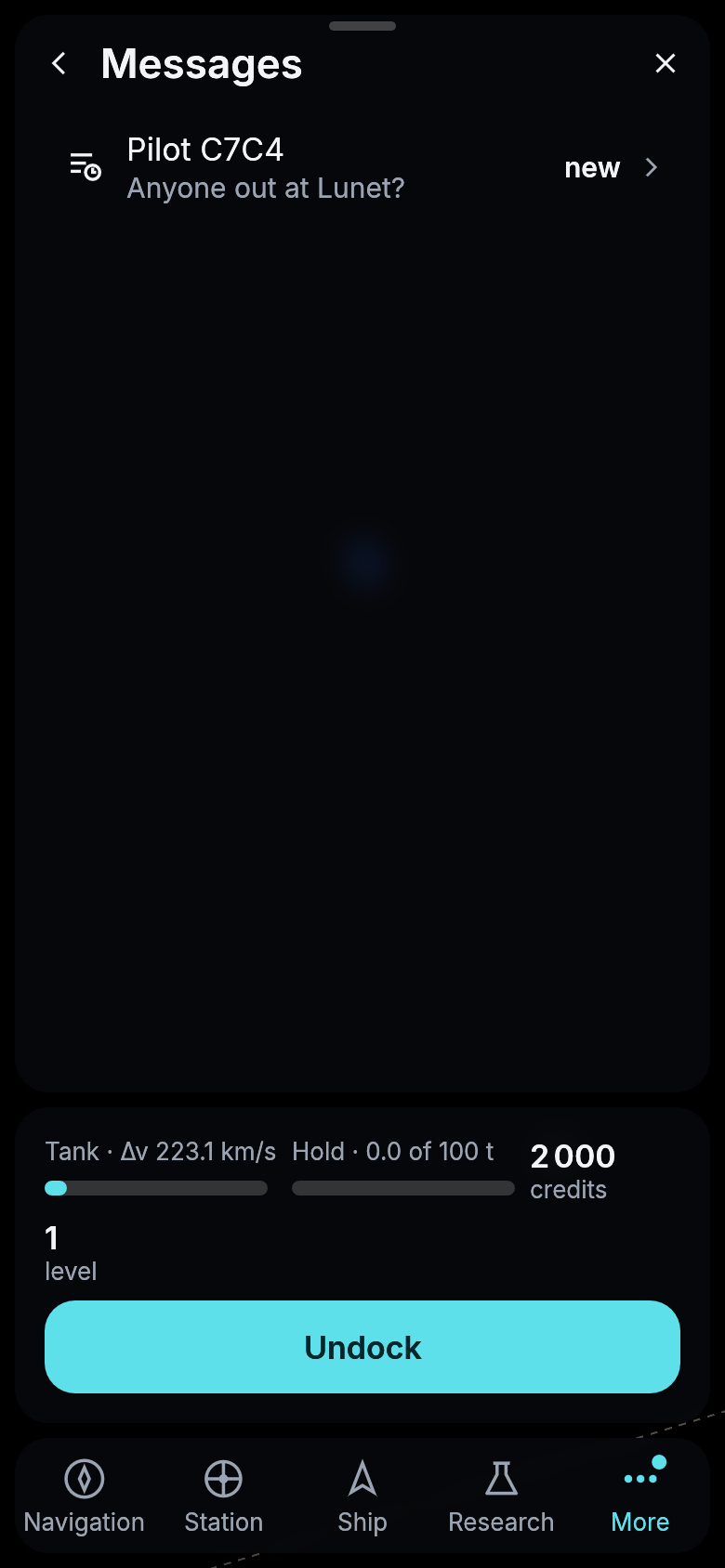
There is no open channel for everyone yet. You can only hail a pilot whose ship you have found, or answer one who hailed you. A hail goes as far as your radio and the Charter’s stations carry it (see in reach and out of reach), so a pilot far out beyond every station can’t hear you until one of you comes closer.
Who was first
The first pilot whose ship reaches a planet, a moon or a rock is remembered for good. Reaching means arriving there, in an orbit around a planet or a moon, beside a rock, or on its ground. The page of every planet, moon and rock in Navigation says who was first and how long ago, or that no pilot has been there yet. If it was you, your log says so too.
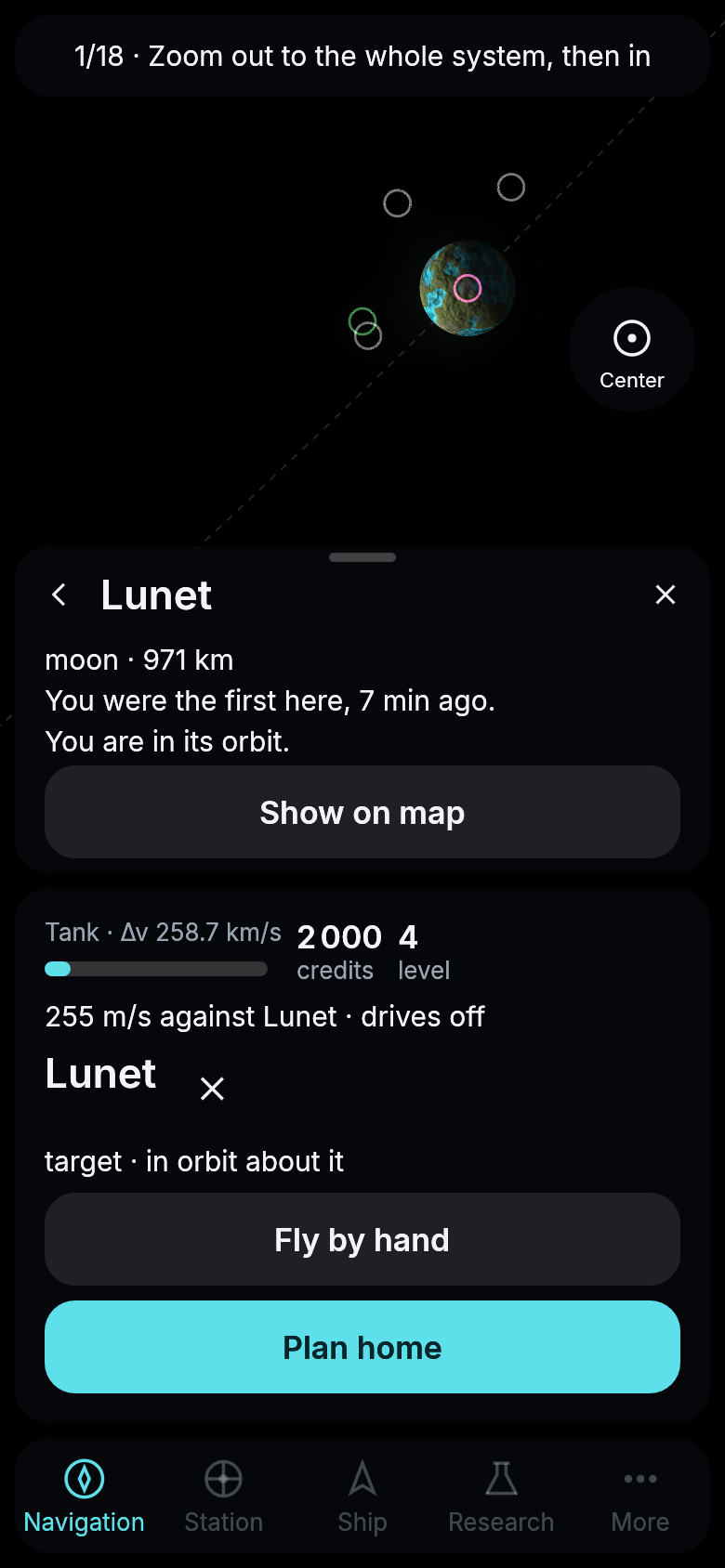
Naming what you reach first
The first pilot to reach a star, a planet, a moon or a rock may name it. The body’s page then says how long you have, a real day, and gives you a field for the name and Name it. The name is everyone’s from then on, on every map and every page, and it stays for ever. If you let the day pass, the next pilot to reach the body may name it instead. The planets and moons of the start system already have their names.
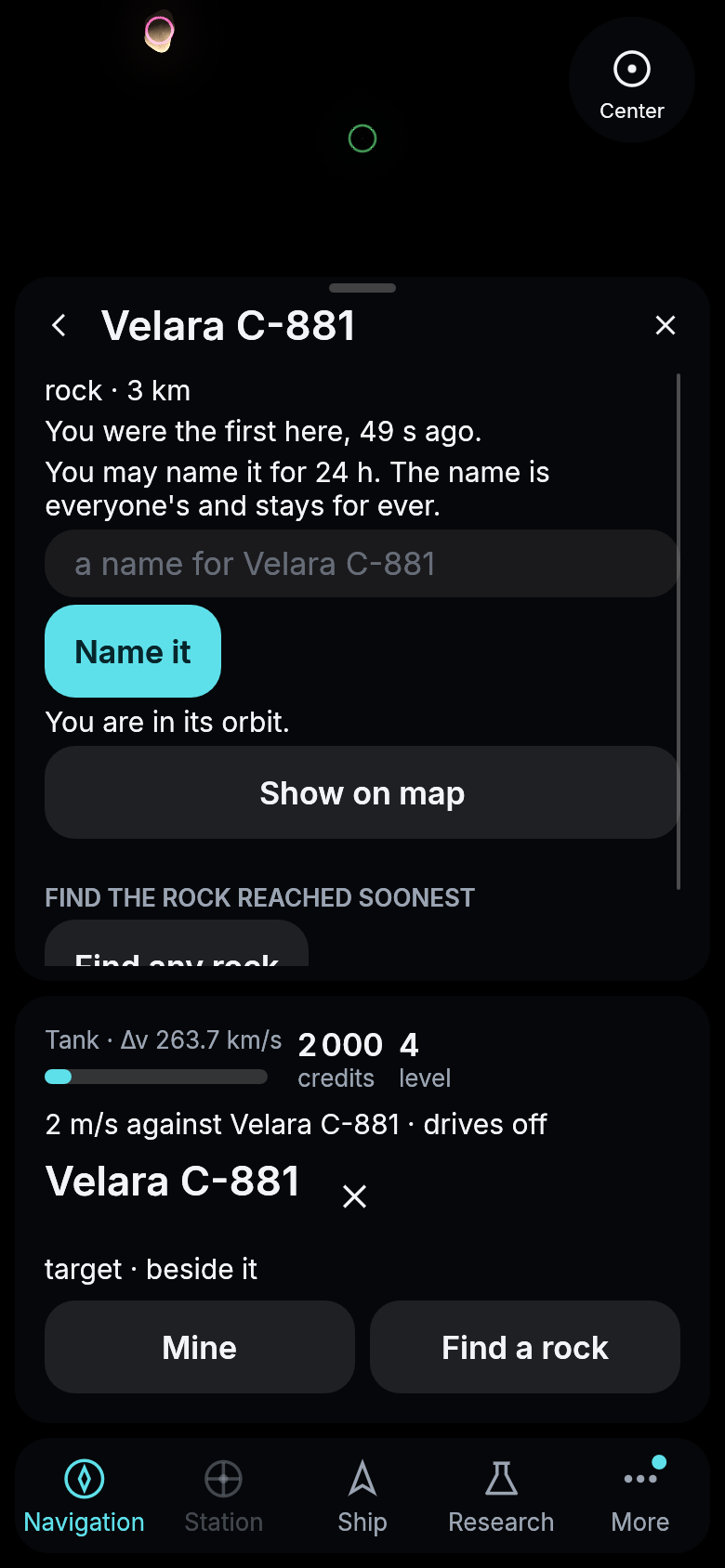
A name is 3 to 24 characters long, made of Latin letters, accents included, spaces, hyphens and apostrophes, and starts with a letter. No two bodies share a name, whatever the case or the accents, and names with rude words are refused.
Next: Factions